
Syntac schools

Bring us a group that wants to learn.

We'll build them a school they can walk into: a real place on a phone or a laptop, teachers who answer when you ask, and practice that shows you how you did. You find the people. We build the rooms.

Know a group worth building for? Pass this page along.

The Grand Hangar in Ground School: two 747s parked under a timber roof at dusk.
Ground School, a Syntac school. The Grand Hangar.

01 · What a Syntac school is

A place to learn in, with teachers who answer.

A world you walk into

Open a link on a phone or a laptop and you're standing in the school. No headset, no download.

Teachers you can talk to

AI teachers, labelled as AI every time, who answer out loud when you ask. They know the course and stay on the subject.

Practice that answers back

The hard part gets rehearsed: an exam question, a conversation, a technique. Then you see what you did well and what to work on next.

Lessons in small steps

Guided lessons with narration, captions and a progress bar that tells you exactly where you are.

A view for the instructor

The person running the school sees who's moving, who's stuck, and what each learner has finished.

A record worth keeping

Quizzes, practice exams and a training record the instructor reviews and can print.

02 · Schools open now

Two schools. Two very different rooms.

Ground School, a Syntac school

Open

Private pilot ground school for Canada, set in a grand hangar where 747s have been turned into classrooms. Aviation pioneers, played as clearly labelled AI portrayals, teach their subjects. A working flight instructor is taking it to flying clubs.

Walk into Ground School ↗

groundschool.syntacdigital.com, open to anyone
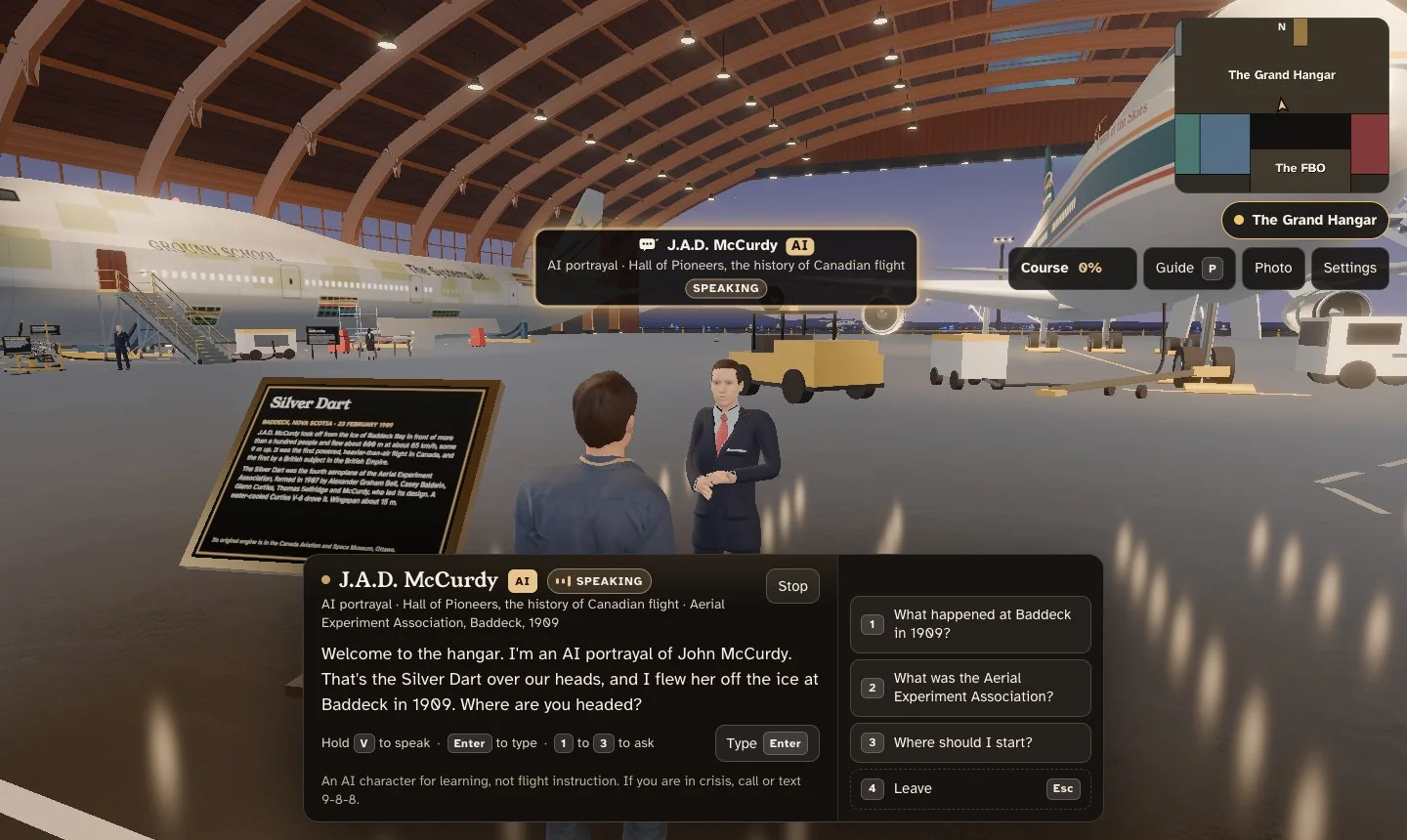
A learner talking with an AI portrayal of J.A.D. McCurdy beside a Silver Dart plaque in the hangar.
J.A.D. McCurdy, an AI portrayal, beside the Silver Dart.
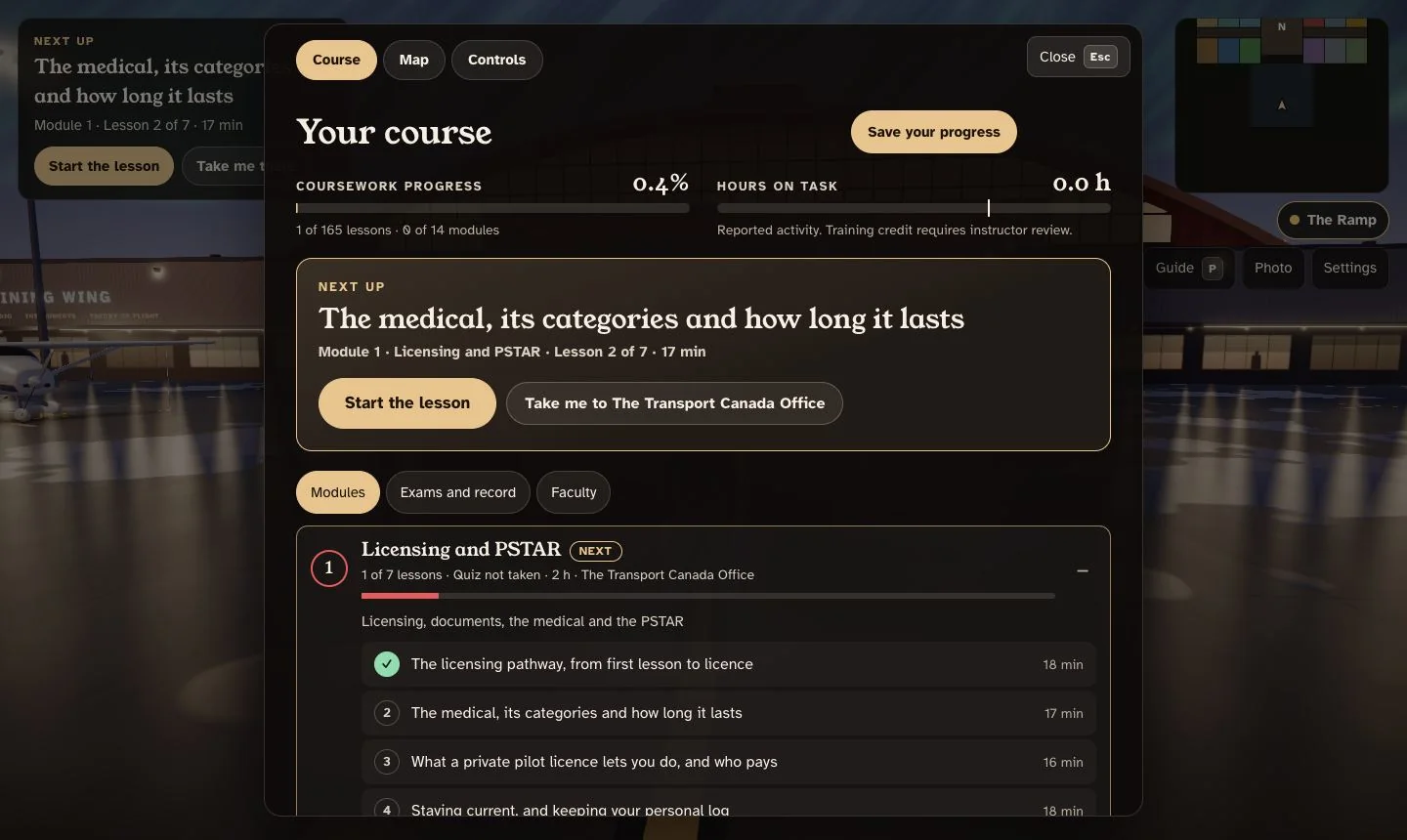
The course panel: coursework progress, the next lesson, and module one's lessons with times.
The course: every lesson, every exam, real progress.
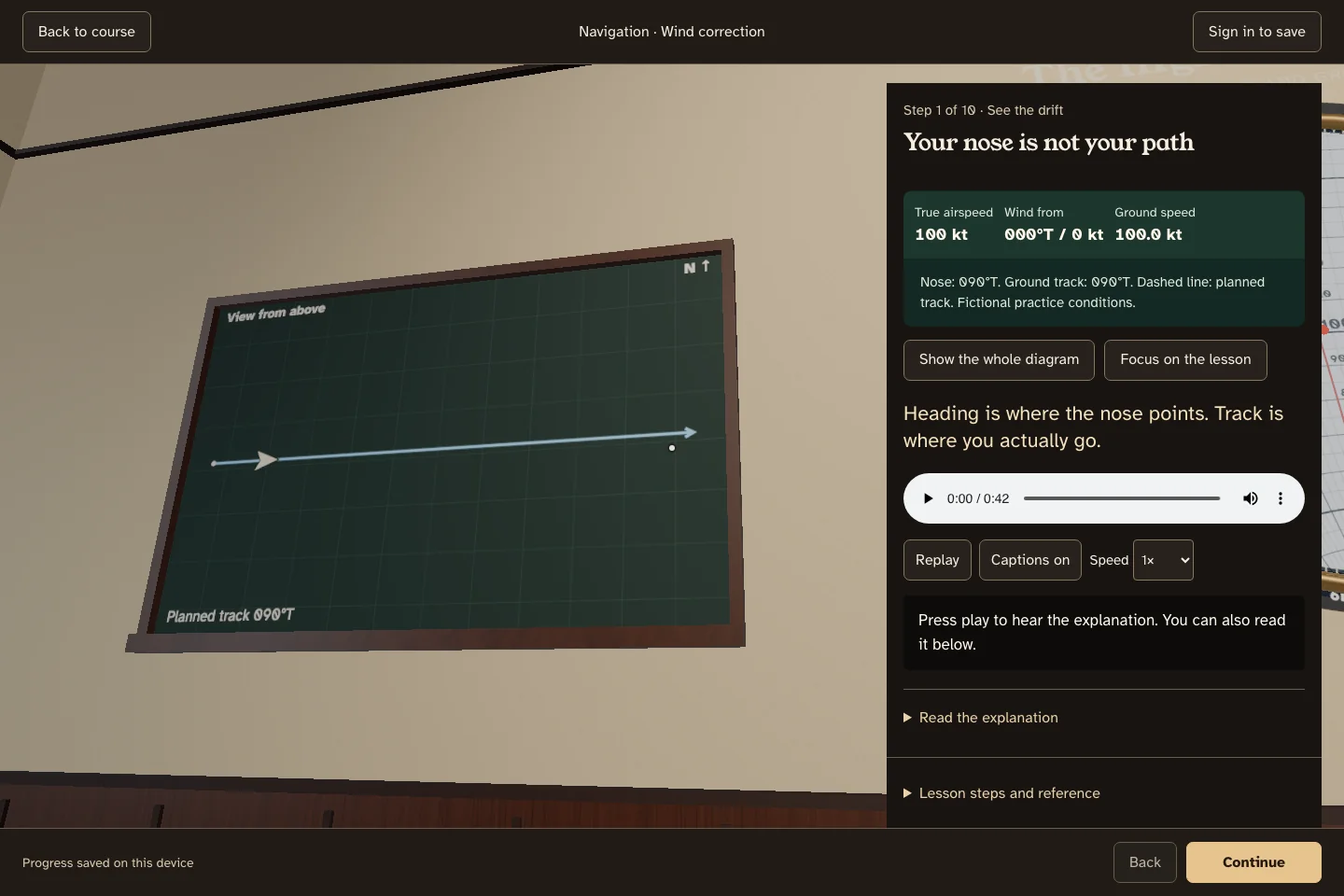
A guided navigation lesson on wind correction, with a chalkboard diagram and narration controls.
A guided lesson on wind correction, one step at a time.

Ciudad Abierta, a Syntac school

In build

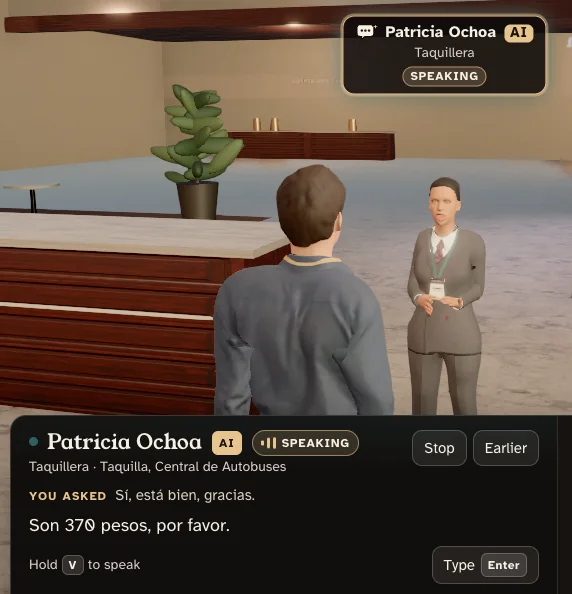
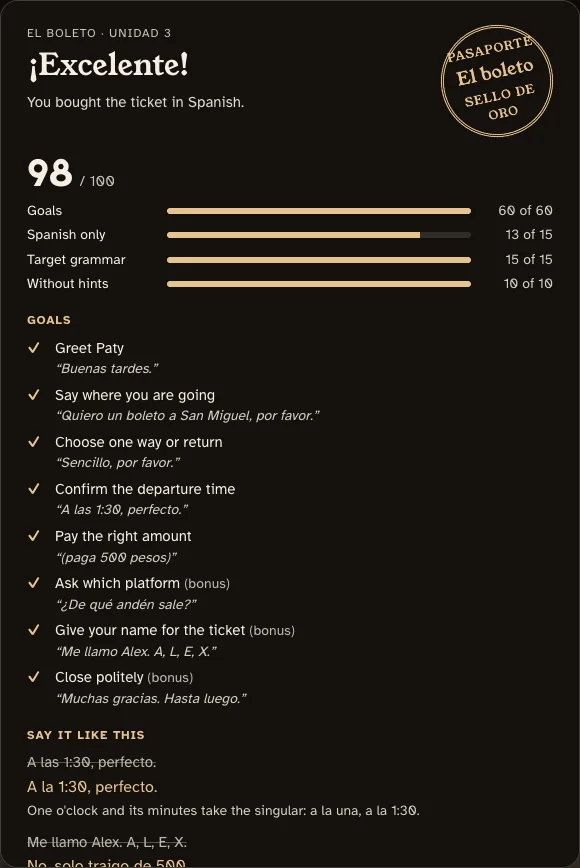
Spanish you learn by living it. You walk up to a bus station ticket window in Mexico and buy your ticket from Paty, who speaks only Spanish and keeps to words at your level. Then a report card shows what landed, how to say it better, and the new words you earned.

Game design by Chris Harder.

Shown by screenshot while it's in build.

A learner at the ticket window with Paty, an AI ticket clerk, who says the fare in Spanish.
Paty, at the ticket window.
The report card after the conversation: a score of 98, each goal ticked with the learner's own words.
The report card after the conversation.

The same platform also runs a real estate investing academy under its owner's own name: the course, the quizzes and the certificates.

03 · The system

Five steps from "they'd love this" to a school with learners in it.

Do them in order. Most ideas stall at step four, and it's far better to find that out before anything is built.

  1. Step 1: Find the room

    A group that already gathers and already pays to learn: a guild, a club, a circle, an association, a congregation. If they've never paid for a workshop, a course or dues, a school won't be the first thing they buy.

  2. Step 2: Find the hard part

    The thing people have to practise before they can do it. An exam they need to pass. A conversation they dread. A technique that takes a hundred tries. The school is built around it.

  3. Step 3: Find the teacher

    Someone the group already trusts to stand behind the content: an instructor, a certifying body, a respected maker. A licensed subject needs a licensed partner who signs off.

  4. Step 4: Prove it

    Talk to ten group leaders. Come back with three who will commit: a cohort date, a signed letter, or members who have paid in advance. Three real yeses beat a hundred likes.

  5. Step 5: Bring it to us

    We scope it with you and put the terms in writing. Half is paid before we build. You walk the first room before we build the rest, and the school opens with a founding cohort.

04 · Score your idea

Seven questions. Answer them the way the group would.

Nothing here is saved or sent. If you like the result, it rides down to the form.

Do they already gather?
Do they already pay to learn?
Is there a hard part to practise?
Would a teacher or a body stand behind it?
Can you reach the people who decide?
Does progress mean something to them?
Is it clean to build?

No real person's likeness, no promised income or results, and no medical, legal or financial advice without a licensed partner.

05 · Ideas to start from

Twelve rooms someone could open.

Ideas, not offerings. Each one names the hard part a school would be built around.

  • Men's groups

    Saying the hard thing out loud, rehearsed before the real conversation with a partner, a son or a boss.

  • Women's circles

    Asking for what you need and holding a boundary, practised somewhere safe first.

  • Knitting and fibre schools

    Reading a pattern and rescuing a dropped stitch, with a teacher at your shoulder at eleven at night.

  • Drone pilots

    Transport Canada's drone pilot exams. The nearest cousin to Ground School.

  • Boaters

    The Pleasure Craft Operator test, and what to do when the weather turns.

  • Amateur radio

    The Basic qualification exam, and your first nervous call on the air.

  • Real estate investing

    The call with a seller in trouble, and walking a deal through at the kitchen table.

  • Language learning

    Ordering, asking, getting lost and found again in the language. Ciudad Abierta shows how.

  • Beekeeping

    The first hive inspection: what you're looking at, and what to do about it.

  • Wine study

    Tasting, service, and the exam that comes with them.

  • Faith community volunteers

    Visiting someone in hospital, sitting with grief, and knowing when to call for help.

  • Newcomer workplace English

    The job interview, the first shift, and the phone call to a landlord.

06 · Three ways in

Pick the part you're good at.

Introducer

You know a group that should have its own school.

What it asks
An introduction, and an hour of your time in the first conversation.
How it earns
A share of what that school pays us, paid once their payment has cleared.

School Lead

You hold the audience or the method, and you want the school to carry your name.

What it asks
The content, the teacher and the learners. We build the school and keep the platform running.
How it earns
What your learners pay is yours. You pay for the build and the platform on terms agreed in writing.

Seller

You'd rather sell a school that's already open, like Ground School.

What it asks
Your network, and a clear sense of who the school is for.
How it earns
A share of every licence or seat you sell, paid once the money has cleared.

Every arrangement is in writing before anything is sold. Every share is paid on money that has cleared. Prices come from us.

07 · Where the lines are

Some schools we won't build.

Real people, only with permission

We portray historical figures with care and label them as AI. A living person's face, voice or name goes in only with a signed licence.

No promised outcomes

No income claims, no guaranteed passes, no promise that a course will change someone's life.

Advice that needs a licence stays licensed

Medical, legal, financial and clinical advice belong to licensed people. A school in those areas needs a licensed partner who signs off.

Practice stays practice

A men's group or a circle can rehearse a hard conversation. The school never stands in for a counsellor, and every AI character points to real help when someone is in crisis.

Your material, or material we can cite

We build from your content, from public sources we can name, or from work you hold the rights to. Nobody else's course gets copied in.

08 · Propose a school

Tell us about the room.

We read every proposal. If it fits, we'll be in touch to set up a call.

We use this only to reply to you.